
- Omics pipelines
- Single-cell workflows
- Analysis pipelines
- Data-processing diagrams
Bioinformatics Workflow Diagram Generator
Bioinformatics Workflow Diagram Generator
Bioinformatics Workflow Diagram Generator turns research content into a structured visual draft you can review, revise and adapt to the requirements of your target journal or presentation.
Bioinformatics Workflow Diagram Generator is an AI-assisted scientific visualization workflow for turning research concepts, methods and evidence into editable, reviewable figures rather than one-shot decorative images.
Editable diagrams · PNG / JPGDraw.io XML LosslessCell / Nature Guidelines
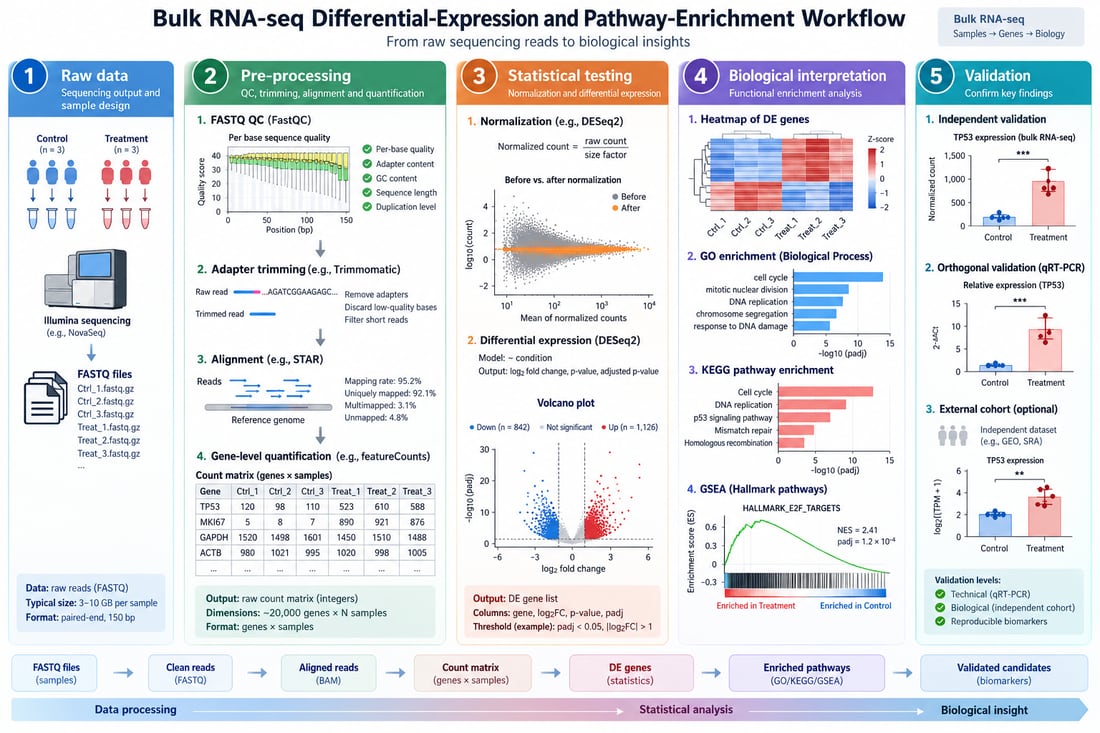
- Research question, methods or source material
- Key entities, stages and scientific relationships
- Target journal, audience or output format
- Reviewable structured visual draft
- Editable labels, layout and hierarchy
- High-resolution export workflow for publication
TASK-SPECIFIC CONTENT
What this figure should make explicit
EXAMPLE PROMPT
A useful starting prompt
Replace the example details with your own study and verify scientific accuracy before publication.
Create a publication-ready draft for “Bioinformatics Workflow Diagram Generator”. Show the essential scientific entities, stages and relationships with concise English labels, explicit arrow meaning, restrained journal-style colors and a clean light background. Do not invent data or unsupported mechanisms.
WORKFLOW
From research material to a reviewable output
- 01Define the message
State the scientific question or message the figure must communicate.
- 02Provide structure
Add the entities, stages, relationships, inputs, outputs and constraints that must appear.
- 03Generate a draft
Create a structured visual draft with clear hierarchy and explicit relationships.
- 04Review and export
Check scientific accuracy, edit labels and layout, then export at the required resolution.
FAQ
Questions researchers ask before using this workflow
Can I edit the output from Bioinformatics Workflow Diagram Generator?
Yes. DoneSCI is designed around reviewable and editable scientific outputs so researchers can correct labels, relationships and layout before export.
Is the generated figure automatically ready for journal submission?
No. Treat AI-generated visuals as a scientific draft. Verify every relationship, label, source, copyright requirement, resolution setting and target-journal policy before submission.
What should I provide for the best result?
Provide the study question, key entities or stages, known relationships, required labels, preferred output format and any journal-specific constraints.
Bioinformatics Workflow Diagram Generator
Start creating